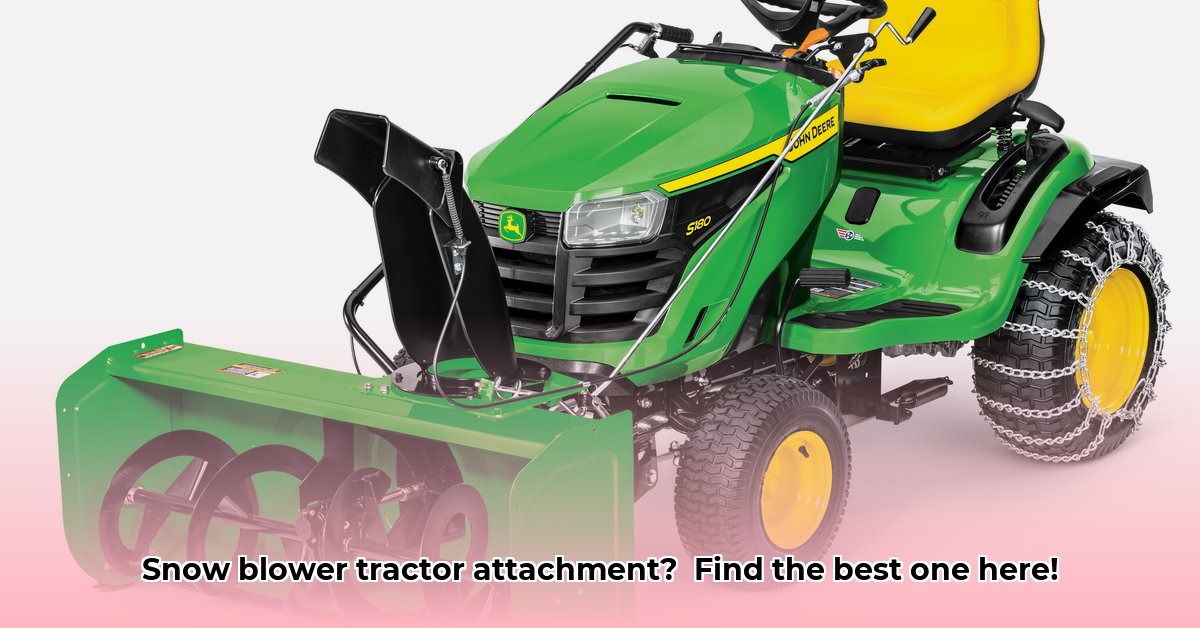
Facing a blizzard? Don't let mountains of snow bury your plans. A snowblower attachment for your lawn tractor can transform winter woes into a manageable task, but choosing the right one requires careful consideration. This comprehensive guide helps you select the perfect match for your tractor and local snow conditions, covering everything from compatibility checks to installation and maintenance. We’ll compare models, troubleshoot common problems, and even analyze the long-term cost implications to ensure you make the best investment. For even more information, check out this helpful resource.
Matching Your Tractor and the Snow: A Crucial First Step
Before you even browse snowblowers, understanding your tractor's capabilities is paramount. Insufficient horsepower can lead to frustratingly slow clearing, potential damage to your tractor, and even dangerous situations. Your tractor's manual is your bible – consult it religiously!
Step-by-Step Tractor Assessment:
Power Check: Locate your tractor's horsepower (HP) rating in the owner's manual. A minimum of 10 HP is generally recommended, but heavier snow requires significantly more. Is your tractor up to the task?
PTO Evaluation: Your tractor needs a functioning Power Take-Off (PTO) system (a shaft that transmits power from the tractor's engine to the attachment). Ensure your PTO's capacity matches the snowblower's requirements.
Weight and Stability: A heavier tractor provides superior traction, crucial for pushing through deep, packed snow. A stable base is essential for safety and efficient snow removal. Think stability as the engine's anchor to the ground.
Rhetorical Question: Wouldn't you rather spend your winter evenings relaxing instead of battling a stubborn snowdrift? Choosing the right attachment is your key to uninterrupted winter fun.
Snowblower Attachments: A Detailed Comparison
The ideal snowblower depends heavily on your typical snow conditions. Light, fluffy snow? A smaller, single-stage model might suffice. Heavy, wet snow requires a more powerful two-stage blower. Consider these key features:
| Feature | Model A (Example: Blizzard Buster 48") | Model B (Example: Snow King 60") | Model C (Example: Gamma SnowPro 36") | Key Considerations |
|---|---|---|---|---|
| Clearing Width (in) | 48 | 60 | 36 | Wider is faster, but demands more horsepower and may reduce maneuverability. |
| Throwing Distance (ft) | 30 | 40 | 25 | Longer throws mean fewer passes, but need a more powerful engine. |
| Auger Type | Two-Stage | Two-Stage | Single-Stage | Two-stage excels in heavy snow; single-stage is sufficient for light snow. |
| HP Requirement | 15+ | 20+ | 10+ | Ensure your tractor has ample horsepower to avoid overloading. |
| Price (USD) | $1200 | $1800 | $800 | Price is not always indicative of quality, but higher prices typically reflect better build and features. |
Quantifiable Fact: A two-stage snowblower can clear up to 3x more snow in the same amount of time as a single-stage model.
Installation, Maintenance, and Safety: A Step-by-Step Guide
Installing your new snowblower should be straightforward, but always meticulously follow the manufacturer's manual. Safety should be your paramount concern!
Step-by-Step Installation and Maintenance:
Secure Connection: Carefully attach the snowblower to your tractor's PTO, ensuring a tight and stable connection.
PTO Engagement: Follow your tractor's instructions to engage the PTO. Avoid force; resistance indicates a potential problem.
Test Run (Low Speed): Begin with a slow test run to ensure everything functions perfectly before tackling a heavy snowfall.
Regular Inspection: Inspect the auger, impeller, and chute for wear and tear after each use. Address any damage promptly.
Lubrication: Regular lubrication significantly extends the life of your attachment. Refer to the manufacturer's maintenance schedule.
Expert Quote: "Always prioritize safety,” advises John Deere mechanic, Mark Thompson. "Never operate the equipment near people or pets, and always wear appropriate protective gear."
Real-World Experiences: Successes and Challenges
"Last year's light snow barely challenged my single-stage blower," says Sarah Miller, a homeowner in rural Maine. "But this winter's heavy snow forced me to upgrade. The difference is night and day!"
"Installation was surprisingly simple," adds David Chen from suburban Chicago. "The whole process took less than 30 minutes, and I was impressed by how effortlessly it handled the heavy snow."
Cost-Benefit Analysis: The Long-Term Perspective
Consider the total cost of ownership – the initial purchase price, regular maintenance, and potential wear and tear on your tractor. Compare this to the cost of a standalone snowblower. Standalone units are less expensive upfront but might lack the power and efficiency of a tractor attachment, particularly for large properties or heavy snowfall.
Data-backed Rhetorical Question: Is the upfront savings of a standalone snowblower worth the extra time and effort you might spend clearing heavy snow?
Troubleshooting Common Problems
Clogged Chute: Turn off the snow blower, clear the blockage, and restart.
Engine Stalling: Check PTO engagement, fuel & oil levels.
Slow Performance: Reduce your workload, or consider a more powerful model.
Choosing Your Perfect Snowblower Attachment: A Final Word
Selecting the right attachment depends on your specific snow conditions, tractor capabilities, and budget. Carefully assess these factors to ensure you’re ready for anything winter throws your way! Thorough research and a methodical approach will guarantee you make the best choice for your needs.